UniCredit Commerzbank Stake: Trading and Liquidity Impacts
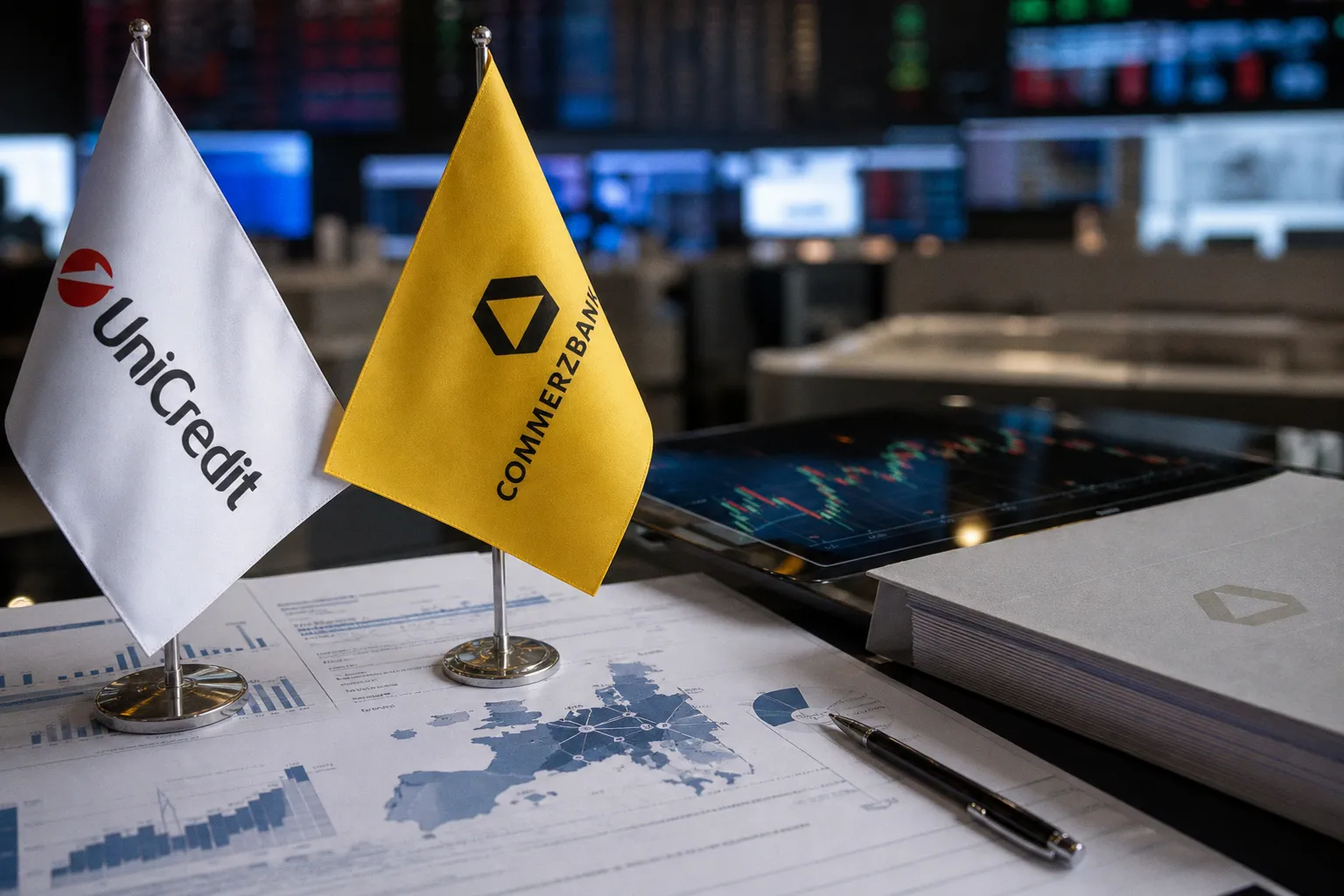
UniCredit's reported accumulation of a nearly 50% stake in Commerzbank following a takeover push injects a significant M&A variable into the European banking sector's order flow and market structure.
Market Structure Implications: Order Flow and Counterparty Stability
A controlling stake of this magnitude reported by Dow Jones signals a fundamental shift in ownership for a major European bank. From a systems perspective, this directly impacts order routing pathways for clients who clear or trade through Commerzbank's prime brokerage or execution desks. The immediate technical due diligence involves reviewing counterparty documentation and assessing the integration timeline's potential to disrupt existing API endpoints and settlement processes. Broker platforms routing through affected entities need to map alternative liquidity pools to maintain execution quality during any transition period.
Advisory Model Shifts and Retail Trading Costs
Separately, MLP SE's emphasis on its advisory-led model highlights a divergent business archetype in financial services. This structure, combining brokerage commissions with fee-based asset management revenue, creates a different cost architecture for the end client compared to pure commission-free trading platforms. Traders should dissect the fee schedules: the "advisory" model can embed costs within managed product spreads or annual management fees, impacting net returns differently than a transparent, per-ticket commission. The stability of such firms is tied to recurring mandates, which may offer less execution lag but introduces complexity in auditing total trading costs.
Regulatory and AI Overheads: The New Layer of Latency
The FCA's review into AI's impact on financial services, as noted by Insurance Edge, points to an emerging compliance layer. For trading technology stacks, this isn't hypothetical. Any AI-driven order routing, risk assessment, or compliance tool will soon operate within a defined regulatory framework. The practical output for platform developers is mandatory audit trails for algorithmic decisions and explainability protocols. This translates to added system latency and computational overhead—a metric traders must factor into platform evaluations, as it directly affects tick-to-trade performance.
The convergence of these headlines—a major banking M&A transaction, a contrasting advisory revenue model, and incoming AI regulation—paints a clear picture: operational stability and cost transparency in trading tech are becoming more complex variables. Verdict: Monitor integration signals from the UniCredit-Commerzbank situation for direct liquidity impacts, and treat advisory model fees and AI compliance overheads as non-negotiable line items in any broker cost comparison.