Options demo trading account: 4 critical selection factors
A paper trade that fills at the price requested is not a trade that filled. Across retail brokerages, demo environments routinely execute orders at displayed prices regardless of what is actually…
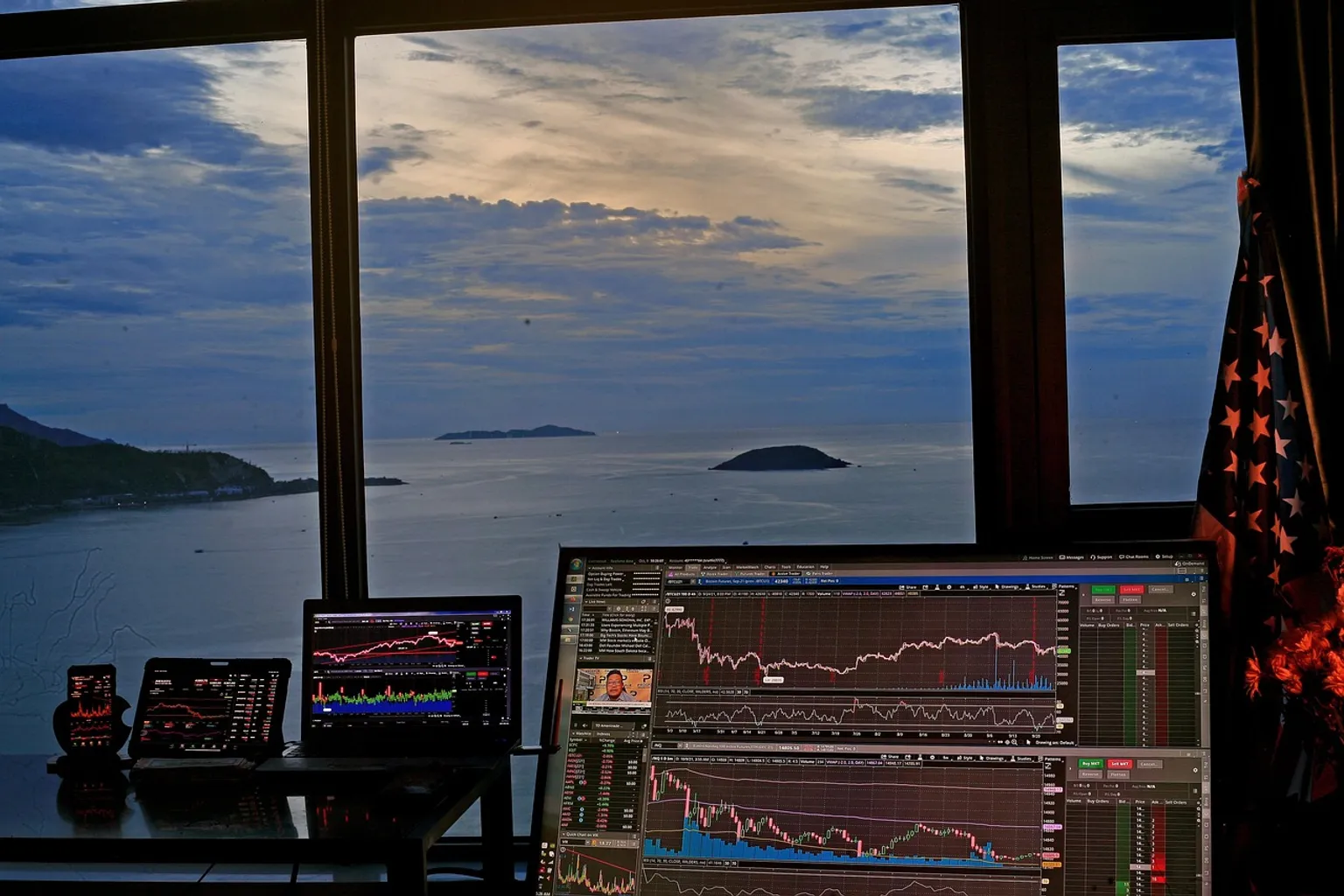
Factors
A paper trade that fills at the price requested is not a trade that filled. Across retail brokerages, demo environments routinely execute orders at displayed prices regardless of what is actually available in the order book, producing simulation results that would be impossible to replicate against real liquidity. For options traders in particular, where multi-leg structures depend on precise pricing across simultaneous contracts, this gap between paper fills and live fills is the single most consequential distortion in pre-trade testing.
The options demo trading account has become a standard onboarding tool at virtually every major brokerage, but the quality of those simulators varies sharply. A trader's strategy library, position-sizing discipline, and risk management framework all originate from decisions made in a simulated environment, so the fidelity of that environment directly shapes what strategies make it into production. The platforms that get this right enable portfolio diversification across volatility regimes, direction, and time horizons; the ones that get it wrong produce a paper track record that misrepresents a trader's actual edge.
The Slippage Gap: Why Demo Fills Often Mislead Traders
Slippage is the difference between the expected fill price and the price at which an order actually executes. In live markets, this gap emerges from volatility, gaps in liquidity, and the latency between signal and execution. In a demo environment, slippage is by default absent. The platform reads the displayed price and assumes the order is filled at that level.
This is not a minor caveat. A vertical spread that prints cleanly in a paper account may gap through both legs in a live order, especially in earnings-driven volatility or off-hours sessions. Iron condors relying on simultaneous fills at four strikes often see only two or three legs execute at the requested prices, leaving the trader with an unhedged position. The lesson that a particular strategy "works" in simulation can be entirely an artifact of frictionless fills.
A simulator that ignores slippage doesn't teach a trader about options — it teaches them to ignore the market.
Practical slippage in options is driven by three forces: the underlying's intraday volatility, the depth of the options order book at the chosen strike, and the latency of the broker's execution stack. When volatility expands, market makers widen quoted spreads, and the available size at the top of the book thins out. A stop-loss order designed to cap a loss at a specific premium may fill at a significantly worse price, converting a calculated risk into a larger realized loss. None of this is reproduced in a standard demo environment.
For traders evaluating options demo trading accounts, the first question is whether the simulator models any of these constraints. Some platforms integrate variable execution prices based on real-time liquidity feeds; others simply confirm the requested price. The former is more useful for stress-testing strategies and observing behavior under stressed conditions; the latter is more useful for memorizing entry mechanics and platform navigation. For serious options work, only the first approach produces a strategy library that translates to live conditions.
A second-order consequence of slippage modeling is psychological. Traders who have never seen a fill worsen in simulation develop a reflex of setting orders at exact prices and expecting exact fills. When the live account breaks this assumption, the typical response is to widen stops excessively or close positions prematurely — both of which destroy the strategic edge the trader thought they had built.
Real-Time Data vs. Delayed Feeds in Paper Trading
Default virtual balances at most major brokerages cluster around $100,000 — thinkorswim's paperMoney and eToro both credit simulated accounts with six-figure starter capital, while IG's demo defaults to £10,000 or $10,000 depending on the jurisdiction. The balances are cosmetic; the data feeding the simulation is not.
Free demo accounts are routinely served by delayed market data feeds. A 15-minute delay is typical, though some brokers extend that window further. For options traders, delayed data introduces a specific distortion: implied volatility surfaces, options chains, and Greeks calculations all depend on the most recent price snapshot. Working with a 15-minute-old underlying price means quoting options premiums off stale inputs, which becomes critical when testing volatility-based strategies, short-dated contracts near expiry, or any structure that depends on the relationship between spot and strike.
Real-time data on many platforms requires either a funded live account or an additional data subscription. The variance is substantial: some brokers include real-time options data on demo accounts as a default; others charge per exchange or per asset class. Before committing time to a particular options paper trading platform, the trader should verify whether the chain being displayed is current.
For binary options specifically, where payouts are fixed between 75% and 95% of staked capital depending on volatility, contract length, and the broker, working with delayed data is a more serious problem. A 15-minute lag in the underlying's price can mean the binary contract is priced off inputs that no longer reflect the market, and the simulated entry point may not be reproducible in a live environment. The trader who calibrates binary strike selection on delayed data builds a model that misfires at the moment of execution.
| Platform | Default Virtual Funds | Real-Time Options Data on Demo | Multi-Leg Order Support | Customizable Balance |
|---|---|---|---|---|
| thinkorswim (paperMoney) | $100,000 | Real-time across most exchanges | Full multi-leg and conditional orders | Limited |
| eToro | $100,000 | Delayed on free account | Limited multi-leg functionality | Limited |
| IG | £10,000 / $10,000 | Real-time for verified accounts | Full multi-leg support | Adjustable |
| Plus500 | Variable | Real-time | Limited options toolset | Yes, via Funds Management menu |
The comparison above is illustrative rather than exhaustive, but it captures the variance in default settings. A trader whose strategy library includes short-dated SPX condors needs a different simulator than a trader building longer-duration equity put spreads, and the demo account should be evaluated against the specific strategy mix planned for live deployment.
Testing Multi-Leg Strategies with Advanced Order Types
An options demo trading account that supports only single-leg market and limit orders is a limited testing ground. The strategies that distinguish a serious options trader from a directional equity bettor — vertical spreads, iron condors, calendar diagonals, debit and credit spreads, ratio spreads — require a platform that handles multi-leg execution as a single atomic transaction.
The minimum required order types for serious options testing include:
1. Limit orders with mid-market and marketable specifications for both entries and exits across all legs
2. Stop-limit orders for defined-risk spot management, especially on single-leg hedges
3. Trailing stops for trend-following structures and ratio spreads
4. Multi-leg order tickets that calculate net debit or credit across all legs simultaneously and report combined margin
5. Conditional orders that trigger one leg only if another fills, useful for protective collars and rolls
6. Time-based orders (GTC, day, expiry-specific) that match the time horizon of the strategy
Vertical spreads, for instance, require simultaneous execution of two legs at a specific net debit or credit. If the platform queues the legs as separate orders, the trader has no guarantee of the combined fill, which is the entire point of the strategy. A demo environment that simulates multi-leg execution as a single atomic transaction gives a realistic picture of what to expect; one that splits the legs into independent orders gives a misleading one.
Cross-margin capabilities also matter at this stage. Brokers that allow offsets between long and short options positions across the same underlying — and in some cases across correlated underlyings — give traders more capital efficiency than those that margin each leg independently. An options trading simulator that reproduces cross-margin accurately helps the trader understand the capital required for a given strategy, which feeds directly into position sizing at the live stage.
Customizing order defaults is equally important. Most retail options traders size positions as a percentage of portfolio capital — typically 2% to 5% per trade for defined-risk strategies, with binary options beginners often capped at 10% to 15% maximum per trade. A demo environment that doesn't allow position sizing to be calibrated to the simulated capital base produces strategy returns that don't translate to live accounts, because a position sized for a six-figure demo balance consumes a fundamentally different share of a five-figure live balance than the simulator is reporting on.
Customizing Virtual Capital to Match Your Realistic Budget
A $100,000 paper account is psychologically very different from a $10,000 live account. Position sizing discipline is significantly harder to maintain when the simulator is reporting 100-bagger returns from a $1,000 position than when it is reporting steady 5% gains from a $50 allocation. The strategic logic that worked in paper can collapse in live capital when the trader is forced to reduce size at the precise moment the strategy is supposed to perform.
Some platforms permit demo balance adjustment. Plus500, for example, allows users to reset or modify virtual funds through a Funds Management menu at any time, supporting multiple iterations during the same session. Other brokers lock the starting balance for the duration of the demo period, which can be useful for tracking discipline metrics over a fixed horizon but less useful for stress-testing strategies at scaled-down capital.
The target should be to set the demo balance to the actual capital the trader plans to deploy. If the live account will be funded at $25,000, the demo should be set to $25,000. If the live account will be funded at $5,000, the demo should be set to $5,000. The reasons are twofold: first, strategy returns and risk exposure scale with position size relative to total capital, and available buying power determines which structures are practically runnable — a multi-leg position sized for a $100,000 demo account may consume the bulk of a $5,000 live account's buying power, leaving no margin for adjustments, rolls, or hedges when a fill goes sideways, and the same logic applies in reverse when a defined-risk structure absorbs a larger share of a smaller book than the trader assumed; second, psychological pressure scales with capital, and the emotional gap between paper and live is partly a function of perceived stakes.
Calibration between demo and live capital isn't optional — it's the difference between learning a strategy and pretending to learn one.
For traders planning to deploy capital across multiple brokers, asset classes, or currencies, the cross-margin and liquidity pool characteristics of the underlying brokerage become material. An options demo trading account at a broker with deep liquidity pools for major indices and single-stock options behaves differently from one at a broker with thin books on the same strikes, even when the platforms look identical from the outside. The spread-to-liquidity differential can be the difference between a viable strategy and a structural loser.
A practical exercise worth running before going live is to scale the same strategy across three demo balances — the planned live capital, half of it, and double it — and compare the implied position sizes, margin requirements, and worst-case drawdowns. Strategies that only "work" at the inflated balance typically do so because the position sizing is hiding the risk. Strategies that hold up across the three balances are the ones with a real edge, and the demo environment should be the place where that distinction becomes visible rather than a conclusion the trader is forced to reach after a live loss.
Conclusion
The options demo trading account is best understood as a reduced-fidelity rehearsal, not a reliable predictor of live performance. The four selection factors that matter most — slippage simulation, real-time data, multi-leg order support, and customizable virtual capital — each determine whether the practice environment produces muscle memory that survives contact with live markets.
A platform that fails on any of these four dimensions will produce a strategy library that looks good on paper and breaks in production. A platform that addresses all four gives a trader a reasonable preview of execution conditions, data quality, and capital psychology, which together form the basis for portfolio diversification across volatility regimes, direction, and time horizons.
For traders evaluating these accounts, the operational questions are straightforward: verify whether slippage is modeled or ignored, confirm whether options data is real-time or delayed, test whether multi-leg orders execute atomically or as separate queues, and adjust the virtual capital to match the live deployment budget. The platforms that pass all four checks are the ones that make the transition from simulation to production a translation rather than a reinterpretation — and that is the only kind of demo environment worth the time spent in it.